
Artificial intelligence is transforming how machines understand human emotions, creating breakthrough opportunities across healthcare, education, security, and countless industries worldwide. 🚀

The ability to recognize and interpret human emotions has long been considered a uniquely human trait. However, recent advances in artificial intelligence and machine learning have brought us to a fascinating crossroads where technology can now decode facial expressions, vocal patterns, and physiological signals to understand how we feel. This revolution in emotion recognition technology is reshaping industries, improving mental health interventions, and creating more empathetic human-machine interactions.
As we navigate an increasingly digital world, the importance of emotional intelligence in technology becomes ever more apparent. From virtual assistants that respond to our mood to educational platforms that adapt to student frustration, emotion recognition AI is bridging the gap between cold computation and warm human understanding.
The Science Behind Emotion Recognition Technology 🧠
Emotion recognition technology relies on sophisticated algorithms that analyze various human signals to determine emotional states. These systems combine computer vision, natural language processing, and biometric analysis to create comprehensive emotional profiles.
At its core, emotion AI processes multiple data streams simultaneously. Facial recognition algorithms track micro-expressions—those fleeting changes in facial muscles that occur in fractions of a second. These subtle movements often reveal genuine emotions that people might consciously try to hide. The technology maps facial landmarks, measuring distances between key points and analyzing muscle movements to classify emotions into categories like happiness, sadness, anger, fear, surprise, and disgust.
Voice analysis adds another dimension to emotion detection. AI systems examine acoustic features including pitch variation, speaking rate, voice intensity, and spectral characteristics. When someone is stressed, their voice might become higher-pitched and faster. Sadness typically manifests as slower speech with less variation in tone. These vocal biomarkers provide valuable insights that complement visual data.
Physiological signals represent the third pillar of comprehensive emotion recognition. Heart rate variability, skin conductance, body temperature, and even brain activity patterns can indicate emotional states. Wearable devices and sensors increasingly incorporate these measurements, creating rich datasets for AI analysis.
Deep Learning: The Engine Powering Emotional AI
The remarkable progress in emotion recognition stems largely from deep learning breakthroughs. Convolutional Neural Networks (CNNs) excel at image processing tasks, making them ideal for analyzing facial expressions. These networks learn hierarchical features, starting with simple edges and gradually recognizing complex emotional patterns.
Recurrent Neural Networks (RNNs) and Long Short-Term Memory (LSTM) networks handle sequential data effectively, making them valuable for processing speech and detecting emotional changes over time. These architectures remember previous states, allowing them to understand context—crucial for accurate emotion recognition.
Transfer learning has accelerated development by allowing researchers to build upon pre-trained models rather than starting from scratch. A model trained on millions of faces can be fine-tuned for specific applications with relatively modest datasets, democratizing access to emotion AI technology.
Real-World Applications Transforming Industries 💼
The practical applications of emotion recognition technology span diverse sectors, each leveraging emotional insights to enhance outcomes and experiences.
Healthcare and Mental Wellness
Mental health professionals are increasingly incorporating emotion AI into their practice. These systems can monitor patients between sessions, detecting warning signs of depression, anxiety, or other conditions. Some applications analyze speech patterns during therapy sessions, providing clinicians with objective data about patient progress.
Autism spectrum disorder therapy has particularly benefited from emotion recognition technology. Individuals with autism often struggle to interpret facial expressions and social cues. AI-powered applications provide real-time feedback and training, helping users develop these critical social skills in safe, controlled environments.
Telemedicine platforms integrate emotion detection to help remote healthcare providers better understand patient conditions. When verbal communication is limited or unreliable, emotional cues provide essential diagnostic information.
Education and E-Learning Platforms
Adaptive learning systems use emotion recognition to optimize educational experiences. When AI detects student confusion or frustration, it can adjust content difficulty, provide additional explanations, or suggest breaks. This personalization increases engagement and improves learning outcomes.
Online proctoring systems employ emotion AI to monitor test-takers, though this application raises important privacy considerations. The technology aims to detect suspicious behavior or excessive stress that might indicate cheating, though its use remains controversial.
Language learning applications benefit significantly from emotion recognition. These platforms can identify when learners feel confident or struggling, adjusting exercises accordingly and providing encouragement at crucial moments.
Customer Service and Marketing
Businesses leverage emotion AI to enhance customer experiences. Call centers use voice analysis to detect frustrated customers, routing them to specialized agents or supervisors. Chatbots with emotion recognition capabilities adjust their responses based on user sentiment, creating more satisfying interactions.
Retail environments increasingly employ facial recognition to gauge shopper reactions to displays, products, and pricing. This real-time feedback helps optimize store layouts and marketing strategies, though it also raises significant privacy concerns.
Market research has been revolutionized by emotion AI. Rather than relying solely on self-reported surveys, companies can now measure genuine emotional responses to advertisements, product designs, and brand messages through facial expression analysis and physiological measurements.
Automotive Safety and Driver Monitoring
Modern vehicles incorporate emotion recognition for safety purposes. Driver monitoring systems detect drowsiness, distraction, and road rage, issuing alerts or even taking corrective action when necessary. This technology has tremendous potential to reduce accidents caused by impaired driving states.
In-cabin emotion AI also enables personalized experiences. Cars can adjust lighting, music, and climate control based on detected moods, creating more comfortable journeys. Some systems even suggest route changes or breaks when detecting high stress levels.
The Technology Stack: Building Emotion Recognition Systems
Creating effective emotion recognition systems requires integrating multiple technologies and methodologies. The typical development pipeline includes several critical stages.
Data collection forms the foundation. Researchers compile diverse datasets containing labeled examples of emotional expressions across different demographics, cultures, and contexts. Dataset quality directly impacts system accuracy, making representative, unbiased data collection essential.
Feature extraction involves identifying relevant characteristics from raw data. For facial recognition, this might include measuring distances between facial landmarks or tracking movement patterns. For voice analysis, features include mel-frequency cepstral coefficients, pitch contours, and energy distributions.
Model training uses machine learning algorithms to recognize patterns associated with different emotions. This process requires substantial computational resources and expertise in neural network architecture design. Researchers must balance model complexity with performance, avoiding overfitting while achieving high accuracy.
Validation and testing ensure systems perform reliably across diverse conditions. Models trained on one demographic may fail with others, highlighting the importance of comprehensive testing protocols. Cross-cultural validation is particularly crucial given emotional expression variations worldwide.
Challenges and Limitations in Emotion AI 🚧
Despite impressive advances, emotion recognition technology faces significant challenges that researchers and developers continue addressing.
Cultural and Individual Variations
Emotional expression varies considerably across cultures. While some emotions like happiness appear relatively universal, others manifest differently in different societies. A model trained primarily on Western faces may perform poorly with Asian or African subjects. Addressing these biases requires diverse training data and culturally aware algorithm design.
Individual differences add another complexity layer. Some people naturally express emotions more overtly, while others maintain neutral expressions despite intense feelings. Neurodivergent individuals may express emotions differently than neurotypical populations. Effective systems must account for this variability without sacrificing accuracy.
Context and Ambiguity
Emotions rarely occur in isolation, and the same expression can convey different meanings depending on context. A smile might indicate happiness, nervousness, sarcasm, or social obligation. Without contextual understanding, AI systems can misinterpret emotional signals, leading to inappropriate responses.
Mixed emotions present particular difficulties. People frequently experience multiple feelings simultaneously—happiness tinged with sadness, or excitement mixed with anxiety. Current classification systems often struggle with these nuanced emotional states.
Technical Limitations
Real-world conditions challenge emotion recognition systems. Poor lighting, camera angles, occlusions, and image quality all impact accuracy. Audio analysis struggles with background noise, multiple speakers, and technical issues. Wearable sensors face calibration challenges and signal artifacts.
Processing speed represents another constraint, especially for real-time applications. Analyzing multiple data streams simultaneously requires significant computational power, limiting deployment on resource-constrained devices.
Privacy, Ethics, and Regulation Concerns 🔒
As emotion recognition technology proliferates, ethical considerations become increasingly urgent. The ability to detect and analyze human emotions raises profound questions about privacy, consent, and appropriate use.
Surveillance concerns top many critics’ lists. Emotion AI enables unprecedented monitoring of people’s internal states without their knowledge or consent. Governments and corporations could potentially use this technology for manipulation, discrimination, or social control. Some cities and countries have already banned or restricted facial recognition technologies due to these concerns.
Data security presents another critical issue. Emotional data is deeply personal and sensitive. Breaches could expose intimate details about individuals’ mental states, vulnerabilities, and private reactions. Robust security measures and strict access controls are essential but not always implemented.
Consent and transparency require careful attention. People should understand when emotion recognition is active and how their data will be used. However, prominent disclosure might alter natural behavior, defeating the technology’s purpose. Balancing these considerations remains challenging.
Bias and discrimination represent serious risks. If training data lacks diversity, resulting systems may perform poorly or unfairly for underrepresented groups. This could lead to discriminatory outcomes in hiring, lending, law enforcement, and other high-stakes contexts.
Regulatory frameworks are gradually emerging. The European Union’s AI Act includes provisions specifically addressing emotion recognition systems, particularly in sensitive contexts like employment and education. However, regulation lags behind technological development, creating uncertainty for developers and users alike.
The Future Landscape of Emotion AI 🔮
Looking ahead, emotion recognition technology promises to become more sophisticated, accessible, and integrated into daily life. Several trends will likely shape its evolution.
Multimodal Integration
Future systems will increasingly combine multiple data sources—facial expressions, voice, physiological signals, body language, and contextual information—creating more accurate and nuanced emotional understanding. This holistic approach will reduce reliance on any single signal and improve performance in challenging conditions.
Edge Computing and Privacy-Preserving Techniques
Processing emotion data locally on devices rather than in the cloud addresses privacy concerns while reducing latency. Federated learning allows model improvement without centralizing sensitive data. Homomorphic encryption enables analysis of encrypted information, protecting user privacy while maintaining functionality.
Personalization and Adaptation
Rather than one-size-fits-all models, future emotion AI will adapt to individual users, learning their unique expression patterns and emotional baselines. This personalization will improve accuracy while respecting individual differences.
Emotional Intelligence Enhancement
Beyond simply detecting emotions, advanced systems will understand emotional dynamics, predict emotional trajectories, and provide sophisticated interventions. AI assistants might detect early signs of burnout and proactively suggest wellness activities, or recognize relationship tension and facilitate constructive conversations.
Developing Responsible Emotion Recognition Technology
As this technology matures, responsible development practices become paramount. Stakeholders across industry, academia, and government must collaborate to ensure emotion AI benefits society while minimizing risks.
Transparency in system capabilities and limitations helps set realistic expectations. Developers should clearly communicate what their systems can and cannot do, avoiding overselling accuracy or capabilities. Documentation should explain how models work, what data they use, and their known biases or failure modes.
User control and consent mechanisms empower individuals. People should be able to opt out of emotion recognition, access their emotional data, and understand how it influences decisions affecting them. Interface design should make these controls accessible and understandable.
Diverse development teams create better, fairer systems. Including people from various backgrounds, cultures, and perspectives helps identify biases and ensure technology works equitably for everyone. Testing protocols should explicitly evaluate performance across demographic groups.
Ongoing monitoring and evaluation prevent systems from degrading or developing unexpected biases over time. As populations and contexts change, emotion AI must adapt while maintaining ethical standards and performance benchmarks.
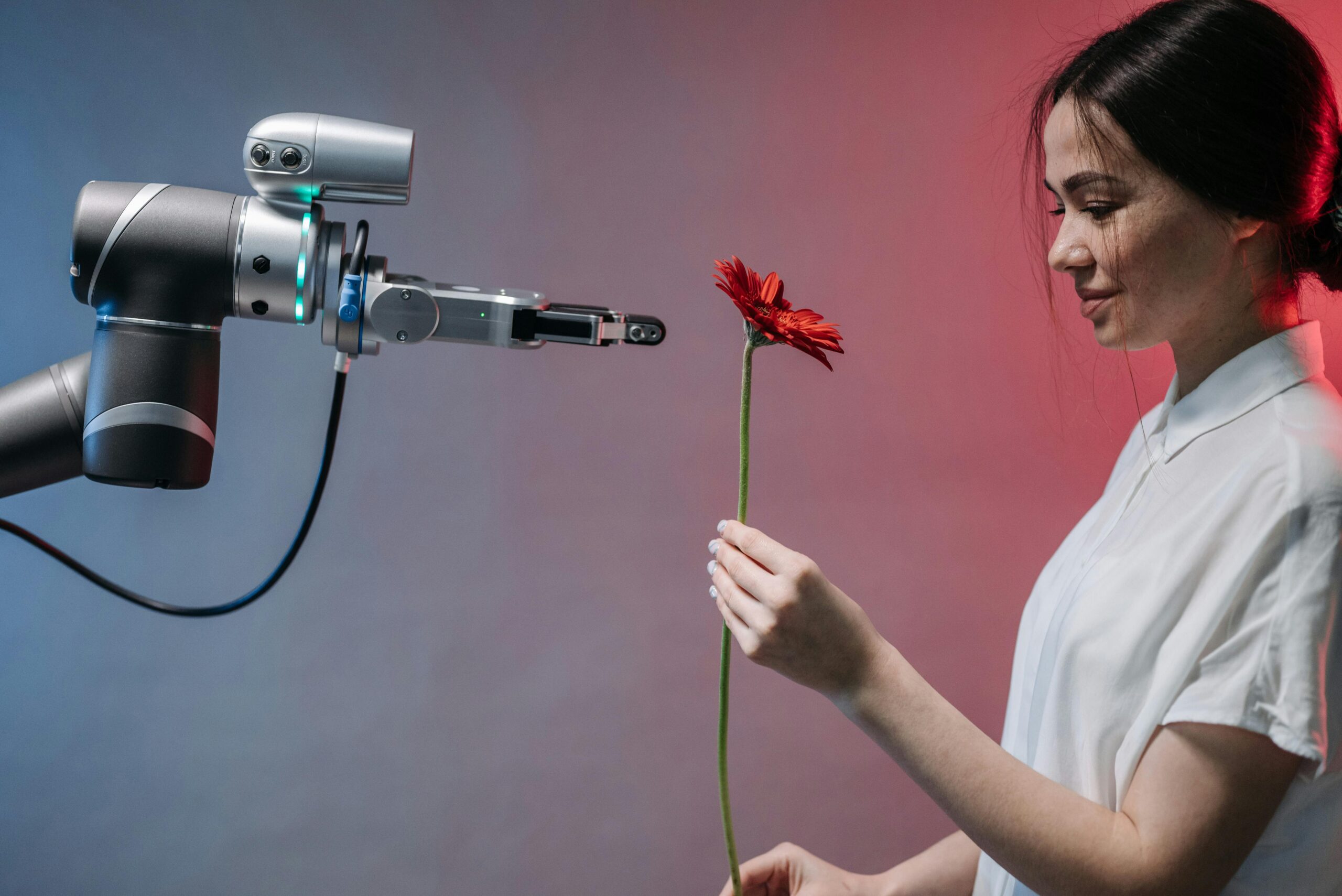
Embracing the Emotional Revolution Thoughtfully
Emotion recognition technology represents a remarkable achievement in artificial intelligence, bringing us closer to machines that understand not just our words and actions, but our feelings. This capability opens extraordinary opportunities to improve mental healthcare, enhance education, increase safety, and create more satisfying human-technology interactions.
However, with great power comes great responsibility. The ability to detect and interpret emotions could easily be misused for manipulation, surveillance, or discrimination. As we continue developing and deploying these systems, we must remain vigilant about privacy protection, ethical use, and equitable access.
The revolution in emotion AI is not just about technology—it’s about redefining the relationship between humans and machines. By approaching this transformation thoughtfully, with robust safeguards and genuine concern for human welfare, we can harness emotion recognition’s potential while preserving the values that make us human. The future of emotionally intelligent technology is being written today, and we all have a role in shaping it responsibly. 💡